




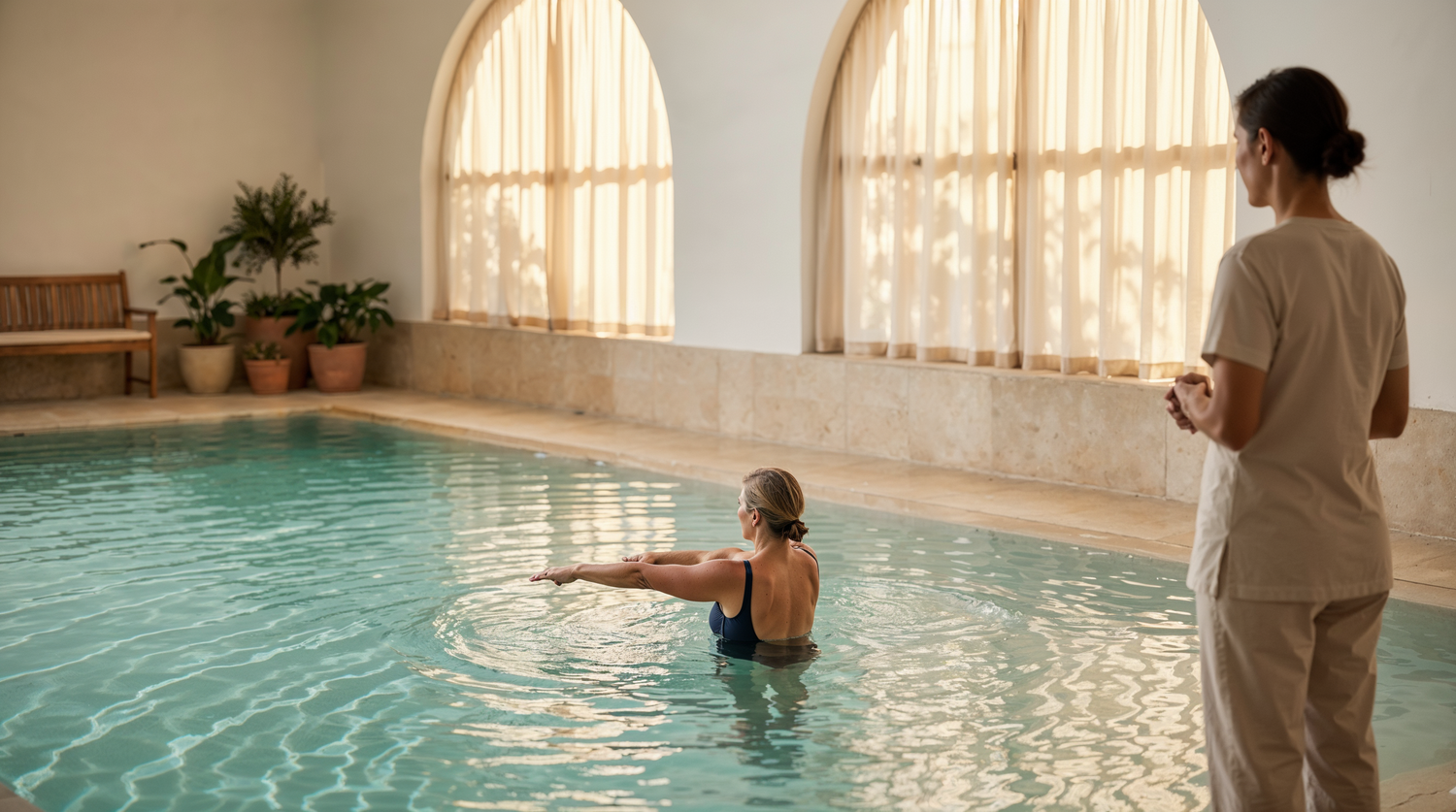
Quick Answer: Aquatic rehabilitation exercises are therapeutic movements performed in water that use buoyancy and resistance to heal injuries, reduce joint pain, and improve mobility. Water supports up to 90% of your body weight, making it ideal for recovery from surgery, arthritis, back pain, and neurological conditions — often allowing movement that's impossible on land.
When chronic pain or injury makes movement on land feel impossible, water offers something remarkable: a space where healing happens without the struggle. Aquatic rehabilitation exercises have helped millions recover from surgeries, manage arthritis, and regain mobility they thought was lost forever.
Research shows that water-based therapy can improve balance, gait, and quality of life more effectively than land-based exercises for many conditions. Whether you're recovering from knee replacement, living with fibromyalgia, or simply looking for joint-friendly fitness, this guide will show you exactly how to harness water's healing properties.
What Is Aquatic Rehabilitation?
Aquatic rehabilitation exercises — also called aqua therapy, hydrotherapy, or water therapy exercises — are therapeutic movements performed in a pool under professional guidance. Unlike swimming for fitness, aquatic rehab uses water's unique physical properties to achieve specific rehabilitation goals.
The magic lies in four key water properties that transform exercise: buoyancy reduces your apparent body weight by up to 90%, hydrostatic pressure provides gentle compression that reduces swelling, viscosity creates natural resistance for strengthening, and warmth relaxes muscles while increasing blood flow.
7 Science-Backed Benefits of Aquatic Rehabilitation Exercises
Water therapy isn't just easier — it's often more effective. A systematic review published in 2023 found that aquatic physical therapy exercises improved balance, gait, and quality of life more than land-based exercises for older adults. Here's why water works wonders for rehabilitation:
1. Reduced Joint Stress
When submerged to waist level, you bear only about 50% of your body weight. At chest depth, that drops to 25-30%. This dramatic reduction allows people with arthritis, joint replacements, or chronic pain to exercise without the jarring impact of land-based movement.
2. Natural Pain Relief
Warm water combined with hydrostatic pressure creates a natural analgesic effect. The constant gentle pressure on skin receptors can actually "shut off" pain signals, allowing greater range of motion during therapy.
3. Improved Cardiovascular Health
Hydrostatic pressure acts like a full-body compression garment, helping blood return to the heart more efficiently. This makes aquatic therapy excellent for patients recovering from cardiac procedures or managing conditions like high blood pressure.
4. Enhanced Muscle Strengthening
Water is 12 times more resistant than air. Every movement in water becomes resistance training, but without the risk of dropping weights or losing balance. You can increase intensity simply by moving faster or using foam equipment.
Pro Tip: Move slowly through water for gentle stretching and relaxation. Move quickly for strength training and cardiovascular benefits. The same exercise can serve completely different purposes based on your speed.
5. Better Balance and Reduced Fall Risk
For older adults or those with neurological conditions, fear of falling is a major barrier to exercise. Water provides a safe environment to challenge balance — if you stumble, the water catches you, building confidence for land-based activities.
6. Earlier Post-Surgery Rehabilitation
Because of reduced weight-bearing, patients can often begin aquatic therapy exercises sooner than land-based rehabilitation. This early start can accelerate recovery timelines for joint replacements, ACL repairs, and spinal surgeries.
7. Psychological Benefits
The relaxing sensation of warm water promotes mental well-being alongside physical recovery. Many patients report reduced anxiety, better sleep, and improved confidence in their movement abilities after starting water therapy.
Conditions That Benefit From Aquatic Rehabilitation Exercises
Water therapy exercises are remarkably versatile. While nearly anyone can benefit from exercising in water, these conditions show particularly strong evidence for improvement:
 12 Best Aquatic Rehabilitation Exercises
These therapeutic water exercises progress from beginner-friendly movements to more challenging options. Always consult your physical therapist or physician before starting, and never push through pain.
🟢 Beginner Level — Building Foundation
1. Water Walking (Forward, Backward, Sideways)
Stand in waist-to-chest-deep water and walk naturally, swinging your arms as you would on land. Take 10-20 steps forward, then backward, then sideways. Keep your back straight and core engaged. This fundamental aquatic rehab exercise improves coordination, circulation, and lower body strength without joint stress.
2. Marching in Place
Stand in chest-deep water near the pool wall for support if needed. Lift one knee toward your hip, then lower and repeat with the other leg. March for 1-2 minutes, maintaining an upright posture. This exercise strengthens hip flexors and improves balance.
3. Arm Circles and Raises
Stand with shoulders submerged. Extend arms to the sides and make small circles, gradually increasing size. For raises, start with arms at your sides and lift them to shoulder height, palms down. Perform 10-15 repetitions. Water resistance provides gentle strengthening for the shoulders and upper back.
4. Leg Swings
Hold the pool edge and swing one leg forward and back like a pendulum, keeping your knee straight. Perform 10 swings, then switch legs. This improves hip mobility and gently stretches the hamstrings and hip flexors.
Start Slow: Begin with just 10-15 minutes in the pool. Even basic water walking provides significant therapeutic benefits. Listen to your body — the goal is gentle progress, not exhaustion.
🟡 Intermediate Level — Building Strength
5. Forward and Side Lunges
Take a large step forward, bending both knees (front knee shouldn't pass toes). Push back to standing and repeat with the other leg. For side lunges, step widely to one side while keeping the other leg straight. Perform 10 lunges each direction. These build lower body strength and hip stability.
6. Pool Wall Push-Ups
Place hands shoulder-width apart on the pool edge. Bend elbows and lower your chest toward the wall, then push back. For more challenge, lift yourself partially out of the water. Perform 10-15 repetitions. This strengthens the chest, shoulders, and triceps with reduced joint strain.
7. Standing Knee Extension
Stand with your back against the pool wall. Lift one knee to hip height, then straighten your leg so it's parallel to the pool floor. Hold for 3 seconds, bend, and repeat 10 times each leg. This isolates and strengthens the quadriceps — essential for knee rehabilitation.
8. Hip Circles
Hold the pool wall and lift one leg slightly. Draw circles with your foot — small circles first, then larger ones. Perform 10 circles clockwise, then counterclockwise, and switch legs. This improves hip mobility and strengthens the muscles surrounding the joint.
🔴 Advanced Level — Maximizing Results
9. Pool Planks
Hold a pool noodle horizontally with both hands. Push it underwater in front of you while leaning forward into a plank position, feet on the pool floor. Your body should form a diagonal line. Hold 15-60 seconds. This challenges core stability without spinal compression.
10. Deep Water Cycling
In deep water, wrap 1-2 pool noodles around your back for flotation. Move your legs in a cycling motion for 3-5 minutes. This provides excellent cardiovascular conditioning and lower body strengthening with zero joint impact — ideal for those with severe arthritis or post-surgery.
11. One-Leg Balance with Noodle
Stand on one leg while placing a pool noodle under your raised foot in a U-shape. Hold for up to 30 seconds, then switch. The unstable noodle adds challenge while water provides safety. This advanced balance exercise helps prevent falls and improves proprioception.
12. Water Jogging with Resistance
Jog across the pool while wearing webbed gloves or holding a kickboard vertically in front of you. The added resistance dramatically increases the cardiovascular and strength benefits. Continue for 5-10 minutes, alternating between jogging and walking recovery.
Important: Never exercise alone in a pool. Even experienced swimmers should have someone nearby. If you feel dizzy, experience chest pain, or have unusual shortness of breath, exit the pool immediately and seek medical attention.
How to Get Started With Aquatic Rehabilitation Exercises
Starting water therapy safely requires some preparation. Here's what you need to know before your first session:
Essential Equipment
Most therapeutic water exercises require minimal equipment: water shoes for traction, a swimsuit, and possibly a towel robe for between exercises. Many therapy pools provide foam noodles, kickboards, flotation belts, and resistance gloves. If exercising independently, consider investing in webbed gloves and a water dumbbell set.
Ideal Water Conditions
Therapy pools typically maintain temperatures between 83-90°F (28-32°C). Warmer water (88-92°F) is best for relaxation and pain relief, while slightly cooler water (83-86°F) allows more vigorous exercise without overheating. Most people exercise comfortably in waist-to-chest-deep water.
Pro Tip: Drink water before, during, and after pool exercise. You still sweat in water — you just don't notice it. Dehydration can cause dizziness and muscle cramps even in the pool.
Finding Aquatic Therapy Near You
Many hospitals, rehabilitation centers, and fitness facilities offer aquatic therapy programs. Ask your physician for a referral, or search for "aquatic physical therapy" plus your city. Some insurance plans cover water therapy when prescribed by a doctor — check with your provider about coverage.
Typical Therapy Timeline
Week 1-2: Assessment & Foundation
Initial evaluation, learning basic movements, 15-20 minute sessions
Week 3-4: Building Strength
Increased repetitions, adding resistance, 25-30 minute sessions
Week 5-6: Advanced Exercises
Challenging balance work, deeper water exercises, 30-45 minute sessions
Week 7+: Transition to Land
Combining pool and land exercises, independent maintenance program
Complementing Pool Therapy With Home Recovery
While aquatic rehabilitation exercises address mobility and strength, comprehensive recovery often involves caring for the whole body. Between pool sessions, gentle self-care practices can enhance your results and keep your body feeling its best.
Many people undergoing rehabilitation also experience skin changes — from chlorine exposure, medication side effects, or simply spending more time caring for their health. Supporting your skin's health during recovery is just as important as the exercises themselves.
Complete Your Recovery Routine at Home
Chlorine and frequent water exposure can leave skin feeling dry and dull. TrophySkin's professional-grade home devices help counteract these effects — from gentle microdermabrasion that removes dry, chlorine-affected skin cells to LED light therapy that promotes cellular renewal and circulation. Support your body's healing from the inside out.
Explore Recovery Solutions →Frequently Asked Questions
⚕️ Medical Disclaimer
This article is for educational purposes only and does not replace professional medical advice. Aquatic rehabilitation exercises should be performed under the guidance of a licensed physical therapist, especially if you are recovering from surgery or managing a chronic condition. Consult your physician before beginning any new exercise program.
Sources & Further Reading:
American Physical Therapy Association • Mayo Clinic • Johns Hopkins Medicine • Arthritis Foundation • PMC/NIH Research Studies on Aquatic Physical Therapy

Leave a comment
This site is protected by hCaptcha and the hCaptcha Privacy Policy and Terms of Service apply.