





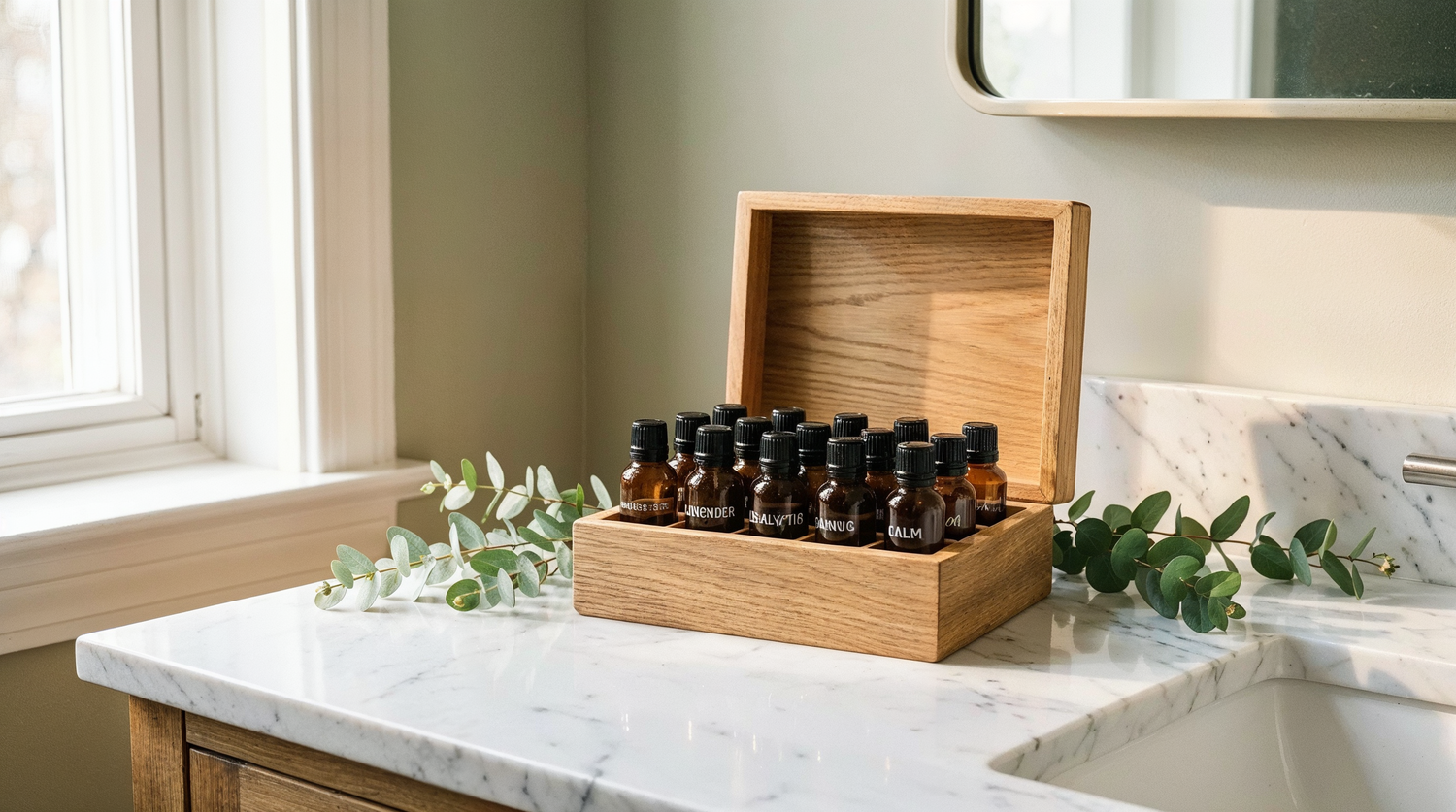
Quick Answer: The best essential oil holder box is made from solid wood (bamboo, pine, or acacia), features individual compartments to keep bottles upright, protects from light and temperature fluctuations, and holds your specific bottle sizes (5ml, 10ml, or 15ml). Wooden boxes with felt-lined dividers offer the best protection for your aromatherapy collection.
Did you know that improperly stored essential oils can lose up to 50% of their therapeutic potency within just six months? If you've invested in a beautiful collection of aromatherapy oils, protecting that investment with the right essential oil holder box isn't just about organization—it's about preserving the healing properties you paid for.
Whether you're new to aromatherapy or have been collecting essential oils for years, finding the perfect essential oil storage box can feel overwhelming. Wooden boxes, carrying cases, wall-mounted displays—the options seem endless. This comprehensive guide will walk you through everything you need to know about choosing, using, and organizing your aromatherapy oil storage solution.
Why Your Essential Oils Need a Proper Storage Box
Essential oils are concentrated plant extracts that contain volatile aromatic compounds. These compounds are what give each oil its unique scent and therapeutic benefits—but they're also extremely sensitive to environmental factors. Without proper essential oil storage containers, your precious oils will degrade much faster than necessary.
The Science Behind Oil Degradation
Three primary enemies threaten your essential oil collection: light, heat, and oxygen. When oils are exposed to these elements, a chemical process called oxidation begins. Oxidized oils don't just smell different—they can cause skin irritation and lose their therapeutic effectiveness entirely.
Citrus oils like lemon, orange, and grapefruit are particularly vulnerable—they can begin degrading in as little as six months if left unprotected. On the other hand, oils like patchouli and sandalwood actually improve with age when stored correctly, developing richer, more complex aromas over time.
How to Choose the Best Essential Oil Holder Box
Not all essential oil boxes are created equal. The material, size, and design features all play crucial roles in how well your storage solution protects your oils. Here's what to consider when shopping for your perfect aromatherapy oil box.
Material Comparison: Wood vs. Plastic vs. Leather
The material of your essential oil storage solution matters more than you might think. Each option has distinct advantages and limitations:
Pro Tip: A wooden essential oil box with a lacquer or satin finish offers the best of both worlds—the natural insulating properties of wood plus protection against accidental oil spills. Look for boxes made from sustainable bamboo for an eco-conscious choice.
Size and Capacity Considerations
Before purchasing an essential oil organiser, take inventory of your collection. Consider not just what you have now, but how your collection might grow. Most oils boxes are designed to hold standard bottle sizes:
- 5ml bottles: Sample sizes, expensive oils like rose or neroli
- 10ml bottles: Standard retail size for most essential oils
- 15ml bottles: Popular with doTERRA, Young Living, and wholesale purchases
- Roll-on bottles: Pre-diluted blends for topical application
A versatile essential oil storage box will have adjustable or removable dividers to accommodate different bottle sizes. If you're just starting out, a 24-36 bottle capacity is usually sufficient. Serious collectors may need 60+ bottle storage solutions.
Types of Essential Oil Storage Solutions
From tabletop boxes to wall-mounted displays, the variety of aromatherapy oil storage options can suit any lifestyle and space. Let's explore the most popular solutions.
Wooden Essential Oil Boxes
The wooden essential oil box remains the gold standard for home storage. These elegant containers offer superior protection from light and temperature changes while adding a touch of natural beauty to your space. Look for features like:
- Hinged lids with secure closures (clasps or magnets)
- Individual compartments with foam or felt lining
- Tiered designs for easy bottle visibility
- Finished wood that resists oil damage

Carrying Cases and Travel Solutions
For aromatherapy enthusiasts on the go, a dedicated essential oil carrying case is essential. These portable solutions typically feature:
- Padded foam inserts to prevent bottle breakage
- Elastic loops or straps to secure bottles
- Water-resistant exterior materials
- Compact designs that fit in purses or carry-on luggage
Hard-shell cases offer maximum protection for travel, while soft cases are lighter and more flexible for everyday carrying.
Wall-Mounted Displays and Shelves
If you want your oils easily accessible while saving counter space, wall-mounted storage is an excellent option. These displays work beautifully in bathrooms, bedrooms, or dedicated wellness spaces. Just remember to choose a wall location away from direct sunlight and heat sources.
Essential Oil Storage Best Practices
Having the right essential oil holder box is just the first step. How you use and maintain your storage system determines how long your oils will retain their therapeutic properties.
The 3 Rules of Essential Oil Storage: Keep oils in their original dark glass bottles, store your aromatherapy oil storage box in a cool dark place (ideally 60-70°F), and always close lids tightly immediately after use to minimize oxygen exposure.
Temperature and Location Guidelines
The ideal storage temperature for essential oils is between 60-70°F (15-21°C). While some aromatherapy experts recommend refrigeration for long-term storage, room temperature in a dark cabinet or closet works perfectly for most home users. Avoid these locations:
- Bathroom cabinets near showers (humidity damage)
- Kitchen counters near stoves (heat exposure)
- Window sills (UV light damage)
- Cars or garages (temperature fluctuations)
Essential Oil Shelf Life Timeline
Different oils have different shelf lives, even when stored properly. Understanding this helps you organize and rotate your collection effectively:
6-12 Months
Citrus oils (lemon, orange, grapefruit, bergamot) — use these first!
2-3 Years
Most floral and herbal oils (lavender, eucalyptus, tea tree, peppermint)
4-6 Years
Resinous and woody oils (frankincense, cedarwood, myrrh)
8+ Years
Patchouli and sandalwood — these actually improve with age!
Common Storage Mistakes to Avoid
Even with the best essential oil storage box, certain habits can compromise your oils' quality. Here are the most common mistakes and the facts that debunk them:
Important: Never store essential oils with rubber dropper tops attached. The concentrated oils will break down the rubber, turning it into a sticky gum that contaminates your oil. Use dropper tops only while dispensing, then replace with the original screw cap.
Other common mistakes include leaving bottles open while you decide which oil to use, storing half-empty bottles (transfer to smaller containers to reduce air exposure), and displaying oils in sunny windows for aesthetic purposes.
Organizing Your Essential Oil Collection
A well-organized collection isn't just satisfying to look at—it helps you use your oils more effectively and ensures you rotate through older oils before they expire. Here are proven organization strategies for your essential oil holder box:
Organization Methods That Work
By Category: Group oils by type—citrus together, florals together, woods together. This makes blending easier and helps you track similar oils' expiration dates.
Alphabetically: Perfect for large collections where you need to find specific oils quickly. Simple and foolproof.
By Use Frequency: Keep your daily-use oils in an easily accessible oils box on your bathroom counter, while storing occasional-use oils in a larger storage box in a closet.
Pro Tip: Use cap stickers or a label maker to mark each bottle's purchase date. This simple habit helps you practice "first in, first out" rotation, ensuring your oldest oils get used before they expire. Many wooden aromatherapy oil boxes come with blank labels for this purpose.
Creating Your Perfect Storage System
Most aromatherapy enthusiasts benefit from a multi-tiered storage approach. Consider combining these elements for optimal organization:
- Primary storage: A large wooden essential oil box (40-60 bottles) kept in a cool, dark closet
- Daily-use station: A small tray or mini box (10-15 bottles) for favorites in your bathroom or bedroom
- Travel kit: A compact carrying case (8-12 bottles) with your essential must-haves
Complete Your Wellness Routine
A well-organized aromatherapy collection pairs beautifully with TrophySkin's professional skincare devices. Enhance your self-care rituals by combining the power of essential oils with LED light therapy for maximum skin benefits.
Explore Our Collection →Frequently Asked Questions
Start Protecting Your Aromatherapy Investment Today
Your essential oil collection represents a significant investment in your wellness journey. By choosing the right essential oil holder box and following proper storage practices, you'll protect that investment for years to come while enjoying oils that smell exactly as nature intended.
Remember the fundamentals: keep oils in dark glass bottles, store them in a cool dark place using a quality wooden essential oil box or appropriate storage solution, and always close lids tightly after use. With these simple habits, your aromatherapy collection will continue to bring relaxation, wellness, and joy to your daily routines.
⚕️ Disclaimer
This article is for educational purposes only and does not replace professional aromatherapy or medical advice. Essential oils are potent substances that should always be used according to proper guidelines. Consult a certified aromatherapist or healthcare professional before using essential oils for therapeutic purposes, especially if you are pregnant, nursing, or have existing health conditions.


Laisser un commentaire
Ce site est protégé par hCaptcha, et la Politique de confidentialité et les Conditions de service de hCaptcha s’appliquent.