





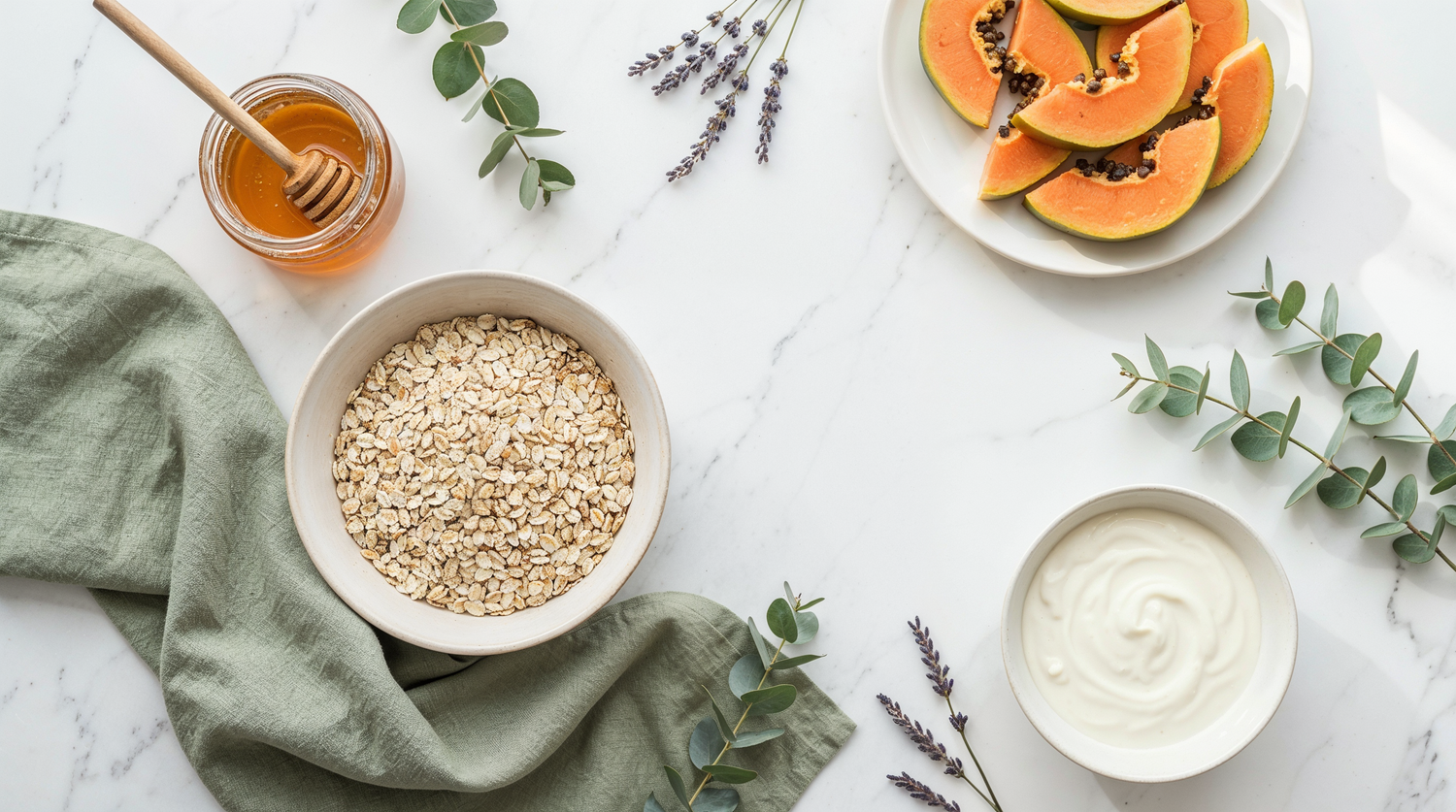
Quick Answer: The best natural exfoliator for sensitive skin is finely ground oatmeal combined with raw honey. Oatmeal soothes inflammation while gently removing dead cells, and honey acts as a natural humectant that locks in moisture. For sensitive skin, avoid harsh scrubs like sugar or salt — instead, opt for enzyme-based exfoliants from papaya or pineapple, or gentle lactic acid from yogurt.
Finding the right natural exfoliator for sensitive skin can feel like searching for a unicorn. Too harsh, and you're left with redness and irritation. Too gentle, and those stubborn dead skin cells just won't budge.
The good news? Your kitchen is probably stocked with some of the most effective (and gentlest) exfoliating ingredients nature has to offer. From soothing oatmeal to enzyme-rich papaya, these home remedies for exfoliating face work beautifully for even the most reactive skin types.
In this comprehensive guide, we'll explore 9 DIY recipes that show you exactly how to exfoliate skin naturally at home — without the redness, stinging, or regret that often comes with traditional scrubs.
Why Sensitive Skin Needs Special Exfoliation
If you've ever experienced burning, stinging, or angry red patches after using a face scrub, you know exactly why sensitive skin requires a different approach. But here's what many people don't realize: sensitive skin actually benefits more from regular exfoliation — when done correctly.
Sensitive skin often has a compromised skin barrier, which means dead cells can build up faster and become trapped, leading to dullness, clogged pores, and uneven texture. The key isn't to avoid exfoliation entirely — it's to find natural ways to exfoliate face without triggering inflammation.
Understanding Your Skin Barrier
Your skin barrier is like a protective brick wall. The "bricks" are skin cells, and the "mortar" is made up of lipids and ceramides. When you exfoliate too aggressively, you're essentially taking a sledgehammer to that wall — removing not just dead cells but damaging the protective barrier underneath.
Natural exfoliators work differently. Ingredients like oatmeal, honey, and fruit enzymes gently dissolve the bonds between dead cells without stripping away essential oils or creating micro-tears in the skin.
Signs You're Over-Exfoliating
Watch for these warning signs that indicate your exfoliation routine is too intense:
- Persistent redness that doesn't fade within an hour
- Skin feels tight, dry, or "squeaky clean"
- Increased breakouts or sensitivity to products
- Visible flaking or peeling
- Stinging when applying moisturizer
Important: If you have active eczema, rosacea flare-ups, sunburn, or open wounds, skip exfoliation entirely until your skin has healed. Even the gentlest natural exfoliators can irritate compromised skin.
Best Natural Exfoliating Ingredients for Sensitive Skin
When searching for the best natural face exfoliator, look for ingredients that offer gentle physical or chemical exfoliation without harsh particles. Here are the top performers for sensitive skin:
🌾 Oatmeal — The Gold Standard
Colloidal oatmeal has been used for centuries to soothe irritated skin. It contains natural saponins that gently cleanse while beta-glucans form a protective film on the skin. The anti-inflammatory properties of oatmeal make it the best natural exfoliating face scrub for those prone to redness or reactive skin.
Best for: Redness, irritation, dry patches, eczema-prone skin
🍯 Honey — Nature's Humectant
Raw honey is a multitasking superstar. It's naturally antibacterial, deeply hydrating, and contains gentle enzymes that help dissolve dead skin cells. Unlike harsh scrubs, honey exfoliates without stripping moisture — in fact, it actively draws moisture into the skin.
Best for: Dry skin, acne-prone skin, dull complexion
🥛 Yogurt & Lactic Acid
Plain yogurt contains natural lactic acid, an alpha-hydroxy acid (AHA) that gently dissolves the bonds between dead skin cells. This chemical exfoliation approach is often better tolerated by sensitive skin than physical scrubbing. The probiotics in yogurt may also help balance skin's microbiome.
Best for: Uneven skin tone, fine lines, dullness
🍍 Fruit Enzymes (Papaya & Pineapple)
Papain (from papaya) and bromelain (from pineapple) are proteolytic enzymes that break down the protein bonds holding dead skin cells together. They work without any physical scrubbing, making them ideal natural exfoliators for the most reactive skin types.
Best for: Extremely sensitive skin, enzyme-only exfoliation
Pro Tip: Always use raw, unprocessed honey for skincare. Commercially processed honey has been heated, which destroys many of the beneficial enzymes and antibacterial properties.
9 Gentle DIY Natural Face Scrub Recipes
Ready to create your own best natural face scrub at home? These recipes use simple, kitchen-friendly ingredients and are specifically formulated for sensitive skin. Always perform a patch test on your inner wrist 24 hours before applying any new mixture to your face.
1. Classic Oatmeal Honey Mask
Ingredients: 2 tbsp finely ground oatmeal + 1 tbsp raw honey + 1 tsp warm water
Method: Mix ingredients into a paste. Apply to damp skin, massage gently for 30 seconds, leave on for 5-10 minutes, rinse with lukewarm water.
Best for: All sensitive skin types, especially dry or irritated skin
2. Soothing Yogurt Banana Scrub
Ingredients: ½ ripe banana + 2 tbsp plain Greek yogurt + 1 tsp honey
Method: Mash banana completely, mix with yogurt and honey. Apply to clean skin, leave for 10-15 minutes, rinse gently.
Best for: Dry, dehydrated skin that needs nourishment
3. Papaya Enzyme Mask
Ingredients: ¼ cup fresh ripe papaya + 1 tsp honey
Method: Mash papaya until smooth, mix with honey. Apply thin layer, leave for 5-7 minutes (no rubbing needed), rinse with cool water.
Best for: Extremely sensitive skin, no-scrub enzyme exfoliation

4. Aloe Vera Calming Exfoliant
Ingredients: 2 tbsp fresh aloe vera gel + 1 tbsp finely ground oats
Method: Combine aloe and oats, let sit for 2 minutes to soften. Apply gently, massage for 30 seconds, leave on for 5 minutes, rinse.
Best for: Sunburned or irritated skin, redness-prone skin
5. Milk & Honey Glow Treatment
Ingredients: 2 tbsp whole milk + 1 tbsp raw honey
Method: Warm milk slightly, mix with honey. Apply with cotton pad or fingers, massage gently, leave on for 10 minutes, rinse.
Best for: Dull skin, uneven tone, gentle chemical exfoliation
6. Rice Powder Gentle Polish
Ingredients: 1 tbsp finely ground rice powder + 1 tbsp rose water + ½ tsp honey
Method: Mix into smooth paste. Gently polish skin in circles for 30-60 seconds, rinse with cool water.
Best for: Brightening, evening skin tone
7. Pumpkin Enzyme Mask
Ingredients: 2 tbsp pumpkin puree (plain, not pie filling) + 1 tsp honey + ½ tsp plain yogurt
Method: Mix all ingredients. Apply even layer, leave on for 10 minutes, rinse thoroughly.
Best for: Anti-aging, boosting radiance
8. Chamomile Oat Soak
Ingredients: 2 tbsp ground oats + 3 tbsp cooled chamomile tea + 1 tsp jojoba oil
Method: Let oats soak in chamomile tea for 3-5 minutes. Add oil, apply to skin, leave on for 10 minutes, rinse.
Best for: Extremely reactive skin, rosacea-prone skin
9. Avocado Honey Hydrating Scrub
Ingredients: ¼ ripe avocado + 1 tbsp honey + 1 tbsp finely ground oats
Method: Mash avocado until smooth, mix in honey and oats. Apply thick layer, massage briefly, leave on for 15 minutes, rinse.
Best for: Very dry, mature, or winter-stressed skin
Remember: The best natural face scrub for sensitive skin doesn't require aggressive rubbing. Let the ingredients do the work — apply gently, let sit, and rinse thoroughly.
How to Exfoliate Skin Naturally at Home — Step by Step
Knowing how to exfoliate skin naturally is just as important as choosing the right ingredients. Follow this gentle protocol to maximize results while minimizing irritation:

Pro Tip: The best time to exfoliate is in the evening. This gives your skin all night to recover and regenerate without exposure to environmental stressors like sun and pollution.
Chemical vs Physical Exfoliation for Sensitive Skin
Understanding the difference between these two approaches helps you choose the right natural exfoliators for your specific needs:
How to Enhance Your Natural Exfoliation Results
While DIY natural exfoliators are wonderful for regular maintenance, sometimes your skin needs a little extra help. Professional-grade at-home devices can take your results to the next level — especially when used in combination with gentle natural treatments.
Think of natural exfoliation as the foundation of your routine: it prepares and primes your skin to better absorb active ingredients and respond to advanced treatments. When your skin is free of dead cell buildup, treatments like LED light therapy and controlled microdermabrasion work more effectively.
Take Your Exfoliation Routine Further
After using natural exfoliators to prep your skin, TrophySkin's professional at-home devices can help you achieve spa-level results. Our MicrodermMD system uses diamond-tip technology with adjustable suction — perfect for sensitive skin that needs controlled, customizable exfoliation.
Explore Microdermabrasion Devices →
Pro Tip: Space out your natural exfoliation and device treatments by 2-3 days. This gives your skin time to recover and prevents over-exfoliation. Listen to your skin — if it feels tight or looks red, give it a rest.
Frequently Asked Questions
⚕️ Medical Disclaimer
This article is for educational purposes only and does not replace professional medical advice. Consult a board-certified dermatologist before starting any new skincare regimen, especially if you have existing skin conditions like eczema, rosacea, or psoriasis, or if you take medications that affect skin sensitivity.
Written by: TrophySkin Editorial Team
Last Updated:


Deixe um comentário
Este site está protegido pela Política de privacidade da hCaptcha e da hCaptcha e aplicam-se os Termos de serviço das mesmas.