




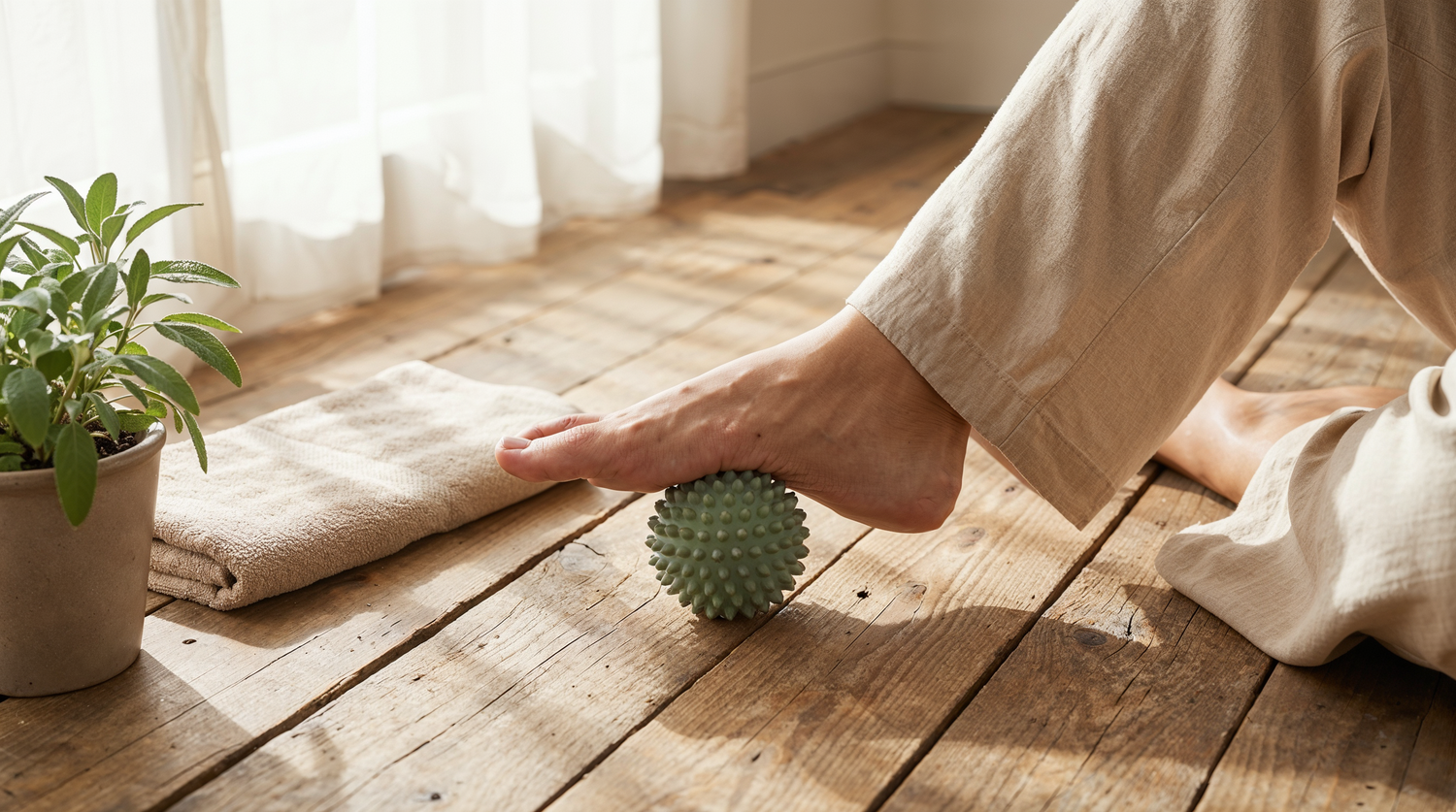
Quick Answer: Plantar massage balls are small, firm balls designed to relieve plantar fasciitis pain and foot tension through self-massage. Rolling a spiky or smooth ball under your foot for 5-10 minutes daily helps break up adhesions, increase blood flow, and reduce inflammation in the plantar fascia. Most people notice improvement within 2-4 weeks of consistent use.
If you've ever taken your first steps in the morning and felt a sharp, stabbing pain in your heel, you know how debilitating plantar fasciitis can be. This common condition affects approximately 10% of people at some point in their lives, making everyday activities feel like a challenge.
The good news? Relief may be as simple as rolling a small ball under your foot. Plantar massage balls have become a go-to tool for physical therapists, podiatrists, and wellness enthusiasts looking for effective, at-home treatment for foot pain.
What Are Plantar Massage Balls?
Plantar massage balls are specially designed tools that target the plantar fascia — the thick band of tissue running along the bottom of your foot, connecting your heel bone to your toes. When this tissue becomes inflamed or develops micro-tears from overuse, it causes the condition known as plantar fasciitis.
These therapeutic balls come in various sizes (typically 5-9 cm in diameter), textures (smooth or spiky), and firmness levels. Unlike a generic tennis ball or golf ball, foot massage balls for plantar fasciitis are engineered with the right density and surface texture to provide optimal pressure without causing injury.
The spiky massage ball for feet has become particularly popular due to its ability to stimulate nerve endings while providing deep tissue massage. The small nodules or "spikes" increase surface contact, promoting better blood circulation and more effective myofascial release.
Key Benefits of Plantar Massage Balls for Feet
Using a plantar fasciitis massage ball regularly offers multiple therapeutic benefits that go beyond simple pain relief. Understanding these benefits can help you stay motivated with your daily routine.
Pain Relief and Inflammation Reduction
Rolling a massage ball for feet applies targeted pressure to the plantar fascia, helping to break up scar tissue and adhesions that form from repetitive strain. This mechanical stimulation triggers increased blood flow to the area, bringing oxygen and nutrients that support tissue healing while flushing away inflammatory compounds.
Improved Flexibility and Range of Motion
A tight plantar fascia limits your foot's natural movement patterns. Regular massage with a spiky ball for feet helps lengthen and stretch the tissue, restoring flexibility. This improved range of motion can positively affect your entire kinetic chain — from your ankles up through your knees, hips, and lower back.
Nerve Stimulation and Sensory Feedback
Your feet contain thousands of nerve endings that provide crucial sensory information to your brain. Using a spiky massage ball stimulates these nerve endings, improving proprioception (your body's awareness of its position in space) and potentially helping with balance and stability.
Pro Tip: For an enhanced cooling effect that reduces inflammation, try freezing your massage ball before use. The combination of cold therapy and massage can be especially soothing after a long day on your feet or post-workout.
Spiky vs Smooth Massage Ball: Which Is Best for Plantar Fasciitis?
Choosing the best massage ball for plantar fasciitis depends on your pain level, sensitivity, and personal preference. Here's how the main types compare:
How to Use a Plantar Massage Ball: Step-by-Step Guide
Proper technique is essential to get the most benefit from your spiky foot massage ball while avoiding injury. Follow this physio-approved method for safe, effective self-massage.
Important: Massage should feel like "good pain" — a deep pressure that provides relief. If you experience sharp, shooting, or burning pain, reduce pressure immediately. Never massage directly over acute injuries, open wounds, or areas of significant swelling without medical clearance.
Creating Your Daily Plantar Fasciitis Exercise Ball Routine
Consistency is key when using physio balls for feet. Here's how to integrate foot massage into your daily schedule for maximum benefit.
🌅 Morning (Before Getting Out of Bed)
Keep a massage ball on your nightstand. Before standing, sit on the edge of the bed and roll each foot for 2-3 minutes. This warms up the plantar fascia before weight-bearing and helps reduce that dreaded first-step pain.
💼 Midday (At Your Desk)
Keep a spiky ball under your desk. While working, slip off your shoes and roll the ball under your feet for a few minutes every hour. This breaks up long periods of sitting and keeps the fascia mobile.
🏃 Post-Exercise
After running, walking, or any workout, spend 5-7 minutes rolling each foot. This helps flush metabolic waste, reduces inflammation, and speeds recovery. Consider using a frozen ball for added anti-inflammatory benefit.
🌙 Evening (Self-Care Time)
End your day with a thorough 5-10 minute session per foot while watching TV or reading. This is your most important session — take your time and focus on any remaining tight spots.

Consistency beats intensity. A gentle 5-minute daily massage is more effective than an aggressive 30-minute session once a week. Your plantar fascia responds best to regular, moderate stimulation that promotes healing without causing additional inflammation.
Common Mistakes to Avoid with Plantar Ball Massage
Even with the best massage ball for plantar fasciitis, improper technique can slow your recovery or cause additional pain. Here are the most common errors and how to avoid them:
❌ Using Too Much Pressure Too Soon
Many people assume that harder pressure equals faster results. In reality, excessive pressure can aggravate inflammation and cause bruising. Start with your body weight distributed mostly on your seated position, gradually shifting more weight onto the ball as your tissues adapt over days and weeks.
❌ Rolling Too Fast
Quick, aggressive rolling doesn't allow your fascia time to release. Slow, deliberate movements give the tissue time to respond to pressure. Think of it like kneading bread dough — gentle and patient wins the day.
❌ Skipping the Calf Muscles
Your calf muscles connect directly to the plantar fascia via the Achilles tendon. Tight calves pull on the fascia, perpetuating pain. Include calf stretches and foam rolling in your routine for comprehensive treatment.
Pro Tip: Don't forget your calf muscles! Roll a lacrosse ball or foam roller along your calves for 2 minutes before each foot massage session. Research shows that combining calf massage with plantar fascia work produces better outcomes than targeting the foot alone.
❌ Expecting Overnight Results
Plantar fasciitis develops over time, and it heals over time too. Most people need 2-4 weeks of consistent daily massage before noticing significant improvement. Some may require 2-3 months for full resolution. Be patient and trust the process.
💆 Comprehensive Self-Care for Your Whole Body
Just as your feet benefit from targeted massage, your face and skin thrive with professional-grade tools. TrophySkin offers award-winning devices for microdermabrasion, LED light therapy, and facial massage — bringing spa-quality treatments to your home self-care routine.
Explore Our Collection →Frequently Asked Questions About Plantar Massage Balls
 Your Path to Pain-Free Feet Starts Today
Plantar massage balls offer a simple, effective, and affordable way to take control of your foot health. Whether you're dealing with plantar fasciitis, general foot fatigue from standing all day, or post-workout soreness, consistent self-massage can make a real difference in how your feet feel.
Remember: choose the right ball for your sensitivity level (starting softer is always wiser), use gentle pressure, be consistent with daily sessions, and give your body time to heal. Combined with proper stretching, supportive footwear, and attention to your calf muscles, massage ball therapy can help you get back to the activities you love — pain-free.
⚕️ Medical Disclaimer
This article is for educational purposes only and does not replace professional medical advice. If you experience severe, persistent, or worsening foot pain, consult a board-certified podiatrist or physical therapist. Plantar fasciitis can sometimes indicate other underlying conditions that require professional diagnosis and treatment.


Dejar un comentario
Este sitio está protegido por hCaptcha y se aplican la Política de privacidad de hCaptcha y los Términos del servicio.